The Stories Objects Carry After Their First Use
The stories objects carry can help you honor a memory without keeping every keepsake. Learn ways to record, share, reuse, or release an object's history.
What should you do with an object that matters to you but no longer has a clear place in your life? The stories objects carry can be honored through more than storage: you can record them, share them, reuse the item, or let it go with care.
Start with one belonging and ask what part of its story you want to preserve. That may be a person’s handwriting, a family recipe, or the fact that an object marked a turning point. Separating the memory from the item’s material form can make your options easier to see.
Identify the part of the story you want to keep
Look closely at the object and name the detail that matters. Is it the maker’s handwriting, the sound of a familiar tune, the way a person used it, or the occasion when it entered your life? A specific detail gives you something to preserve, even if the object itself moves on.
Try writing a few plain sentences: who was connected to the item, what happened, and what you want to remember. Avoid polishing the account. A simple note in a journal or on a card can be more useful to family members than a vague label such as “Grandma’s things.”
Think of the object as a book cover: it can point toward a story, but the story does not have to live only in the cover. The object may remain important, yet a record of its meaning can travel in another form.
Choose a way to carry the memory forward
Different objects call for different forms of remembrance. A photograph captures appearance; a written account can preserve names and context; a shared meal or retold story can keep a tradition active. Choose the form that fits what you value about this particular item.
- If the object’s shape or decoration matters, photograph it in natural light and include a close view of distinctive details; if those details do not tell the story, add a written note.
- If the item is connected to a person, write that person’s name and your relationship to them; if the connection is uncertain, describe what you know and leave the gap open.
- If a recipe card carries the memory, copy the recipe and note whose handwriting appears on the original; if the recipe itself is not important, record the occasion or person it brings to mind instead.
- If a family object has a willing recipient, offer it without pressure and explain that declining is acceptable; if nobody wants it, consider recording its story before choosing another destination.
- If the item can serve a new purpose, try that use in a way that does not damage it; if the new use feels forced or impractical, stop and consider sharing or releasing it.
- If a keepsake brings up painful feelings, put it somewhere safe and pause; if the distress continues or feels hard to manage, seek support from someone you trust or a qualified professional.
Make a considered choice when family memories are involved
A relative may attach a different meaning to the same object. Listen to what they remember, then be clear about what you can take responsibility for. You can invite them to keep the item, share a photograph, or contribute their own account without promising to preserve the object indefinitely.
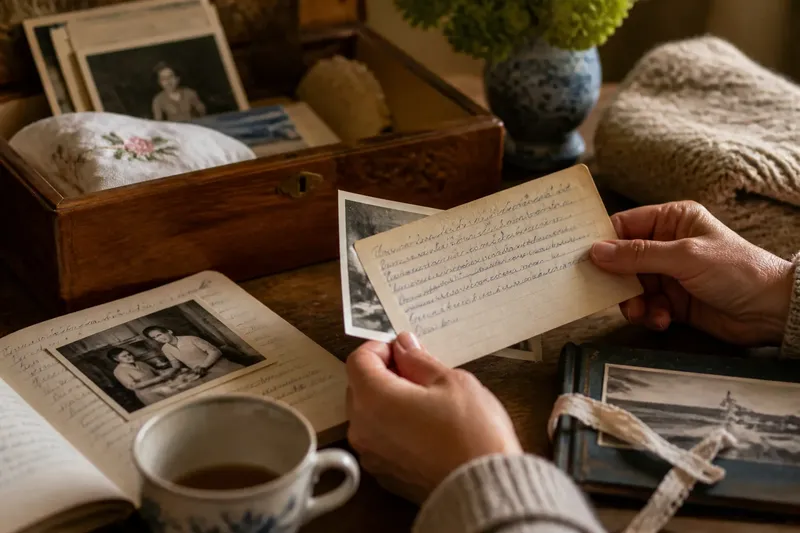
Say you have a handwritten recipe card from an aunt, and your cousin remembers cooking from it together. You want the handwriting and the shared memory, but you do not cook from the stained card. You photograph both sides, write down the dish and the occasion your cousin recalls, and send the files to them. Your cousin says they would like the original, so you arrange to pass it along; if they had declined, your record would still preserve the details you both wanted to remember.
Decide what to do with an object’s story?
Begin by matching the form of remembrance to the detail you want to keep. The questions below can help you choose without turning a meaningful belonging into a demand to preserve everything.
How do I preserve handwriting or other details?
Take clear photographs in good light, including close views of distinctive marks or writing. Add a note naming the person and explaining what the image does not show.
What should I do if relatives disagree about an heirloom?
Ask each person what the object means to them and whether anyone is willing to care for it. If no agreement emerges, avoid making promises on another person’s behalf and consider sharing a record of its history.
Can I pass on an object without losing its story?
Yes. Tell the recipient what you know, include a written account or photograph if useful, and let them decide whether they want the item. The memory can be shared even when the object changes hands.
What if I am not ready to choose?
Keep the item safely and leave the decision open. You can return to it when you feel ready; a pause is different from making a permanent commitment.
Leave a record that someone else can understand
If you keep a keepsake, store its account with it rather than relying on memory alone. A small acid-free card, a labeled digital photo, or a note in a family recipe book can explain who is pictured, who made the object, or why it matters. Use names and context that a future reader will recognize.
For a digital record, save the image and note together in a clearly named folder, then make a backup in a separate location. If you share the record with relatives, ask before including private details or images of other people.
The stories objects carry are easier to pass on when their context travels with them. A short, specific account can help someone understand why an item mattered, even if its next home—and its next use—are different from yours.